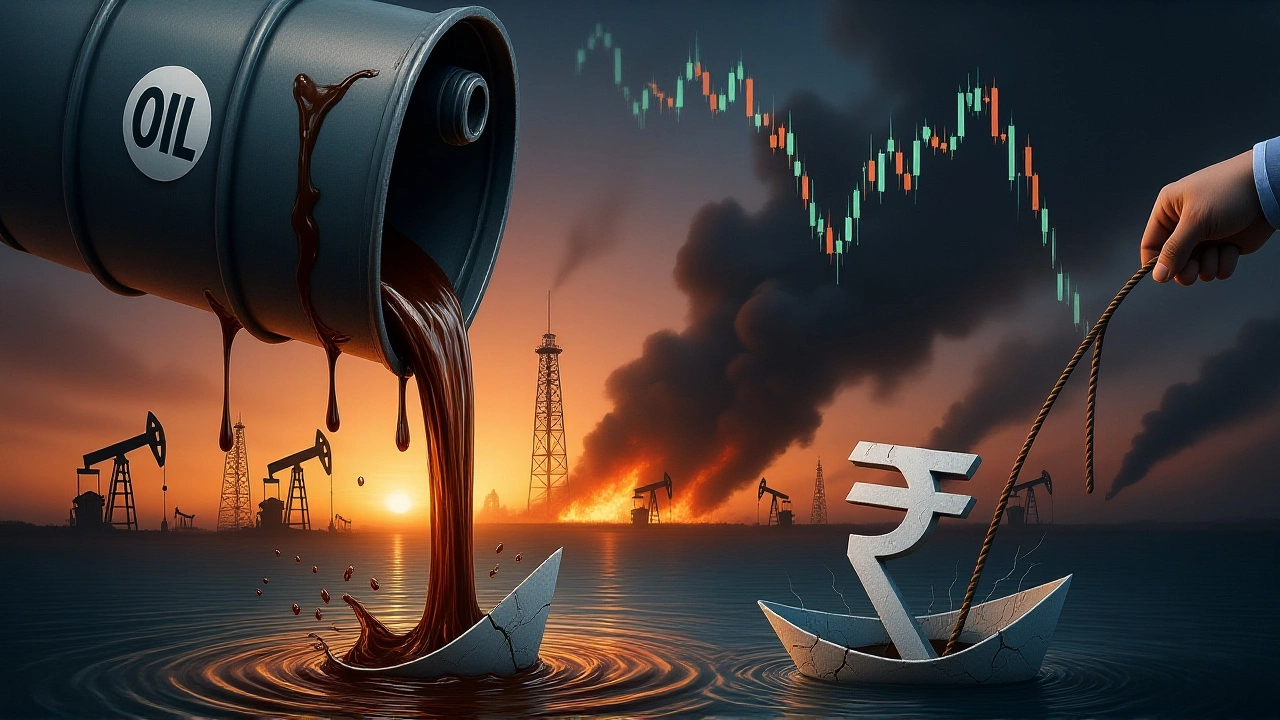
Global oil markets took a sharp turn downward this week, shedding significant value as geopolitical tensions eased. Donald Trump, the U.S. President, signaled openness to direct negotiations with Tehran, sparking hopes that the Strait of Hormuz might reopen for full traffic. The result? West Texas Intermediate (WTI) crude fell 4.4% to $96.60 per barrel, while Brent crude dropped 5.2% to close at $103.54.
The volatility wasn't just a blip; it was a relief rally after weeks of anxiety. Just days earlier, on May 18, 2026, prices had spiked to multi-month highs following threats from Washington against Iran. But by Tuesday, May 19, traders were dumping positions, betting that diplomacy could trump sanctions. Here's the thing: even with this drop, oil remains expensive. We're still hovering near the psychological $100 mark, which keeps pressure on consumers and businesses worldwide.
A Rollercoaster Week in Energy Markets
If you've been watching the charts, you know this has been a wild ride. According to data from the Vietnam Commodity Exchange (MAXV), all five major energy commodities saw declines this week. The MAXV Index, a benchmark for regional energy sentiment, plummeted nearly 5% to 4,409 points. That’s the steepest weekly fall since June 2025.
But wait—the path to this drop was anything but straight. In early April 2026, Brent crude slipped below $95, briefly touching $94.42 before recovering slightly. Then came the shift. By late April, U.S. crude (WTI) tumbled from the $98 range down to around $90.65. Analysts pointed to slowing demand growth and ample global supplies. Yet, those gains evaporated quickly when political rhetoric heated up again.
The twist arrived in mid-May. On Monday, May 18, WTI surged to $106.80 and Brent hit $110.45. Why? Fear. Fears that the Strait of Hormuz—a critical chokepoint through which about 20% of the world's oil passes—could be permanently blocked due to escalating tensions between the U.S. and Iran. Traders priced in disaster scenarios overnight.
Diplomacy Over Disruption?
Then came the pivot. Senior Iranian officials reportedly described recent U.S. proposals not as final demands, but more like a "wishlist" open for negotiation. While hardliners remain skeptical, the mere possibility of dialogue sent shockwaves through trading floors globally. Oil doesn’t trade on what *is* happening—it trades on what *might* happen. And right now, the market is pricing in peace.
This isn’t the first time geopolitics have driven such swings. Remember the 2019 attacks on Saudi Aramco facilities? Or the 2020 price war between Russia and Saudi Arabia? Each event created temporary spikes followed by corrections. What’s different this time is the scale of existing supply constraints. The International Energy Agency (IEA) has warned that global oil supply could face severe shortages later in 2026 if current disruptions continue.
Supply Concerns Persist Despite Drop
Even with falling prices, underlying structural issues remain unresolved. U.S. crude inventories fell by 2.3 million barrels last week, ending at 457.2 million barrels. Sounds good, right? Not quite. Analysts had expected a drawdown of 3.3 million barrels. So while stocks are shrinking, they’re doing so slower than anticipated. This suggests demand is holding steady despite high prices—or perhaps that alternative sources aren’t ramping up fast enough.
Saudi Arabia continues to manage output carefully, balancing OPEC+ agreements with its own economic needs. Meanwhile, non-OPEC producers like the U.S., Brazil, and Guyana are increasing production, but not at a rate sufficient to fully offset potential Middle Eastern shortfalls. If the Strait of Hormuz stays partially restricted—even intermittently—prices will stay volatile.
What Lies Ahead for Oil Buyers?
For everyday consumers, the immediate impact may feel muted. Gasoline prices don’t always move in lockstep with crude benchmarks, thanks to refining costs, taxes, and local distribution factors. Still, sustained high crude prices tend to filter down eventually. Drivers should expect elevated fuel costs through summer unless another major geopolitical de-escalation occurs.
Businesses relying on transportation or manufacturing inputs are also feeling the pinch. Logistics companies report rising operational expenses, some passing these costs onto customers. Airlines, already struggling with post-pandemic recovery, face renewed margin pressures. As one industry analyst noted, “We’re living in an era where every barrel counts—and every headline matters.”
Looking ahead, watch for two key developments: First, any official confirmation of resumed talks between Washington and Tehran. Second, updates from the IEA regarding global inventory levels and production forecasts. Both will heavily influence whether today’s dip becomes a trend—or just a pause before the next spike.
Frequently Asked Questions
Why did oil prices drop so sharply this week?
Oil prices fell primarily due to renewed hopes for diplomatic progress between the United States and Iran. After weeks of heightened tension threatening the Strait of Hormuz, signals of potential negotiations reduced fears of prolonged supply disruptions, leading traders to sell off positions.
How does the Strait of Hormuz affect global oil prices?
The Strait of Hormuz is a narrow waterway connecting the Persian Gulf to the Open Sea, through which roughly 20% of the world’s oil supply passes daily. Any threat to its closure—whether real or perceived—triggers immediate price spikes as markets anticipate constrained supply and logistical bottlenecks.
Are oil prices likely to keep falling?
Not necessarily. While short-term optimism drives current declines, long-term fundamentals remain tight. The International Energy Agency warns of potential supply deficits in 2026. Unless new production comes online rapidly or demand weakens significantly, prices could rebound quickly if geopolitical risks resurface.
What does this mean for gasoline prices at the pump?
Gasoline prices typically lag behind crude oil movements by several weeks. While the recent dip in crude may lead to modest reductions in fuel costs over the coming months, overall prices are likely to remain elevated compared to pre-2025 levels due to persistent supply chain constraints and higher baseline crude values.
Who benefits most from lower oil prices?
Consumers, airlines, shipping firms, and manufacturers benefit directly from lower input costs. Reduced energy expenses can ease inflationary pressures and improve profit margins. However, oil-exporting nations like Saudi Arabia and Russia may see decreased revenues, potentially impacting their fiscal budgets and investment plans.

Aarav Menon
I'm Aarav Menon, an experienced journalist and news enthusiast with a passion for Indian news. I have spent years honing my skills in journalism and have developed a deep understanding of the Indian political, social, and economic landscape. Through my writing, I strive to bring accurate, informative, and engaging news stories to my readers, focusing on topics that matter to them. I believe in the power of the written word to inform and inspire, and I am committed to using my expertise to make a difference in the world of news.